Maybe End-of-Life Battery Collection Needs Fewer Buildings and Better Containers
CEVA's new maritime battery service points to a simple idea: put the safety system inside the logistics unit, drop it where batteries show up, and move it when it is full.
CEVA Logistics recently launched a secure maritime transport service for used lithium-ion batteries moving from island territories to recycling and processing centers in continental Europe. That sounds like a narrow shipping story. I do not think it is.
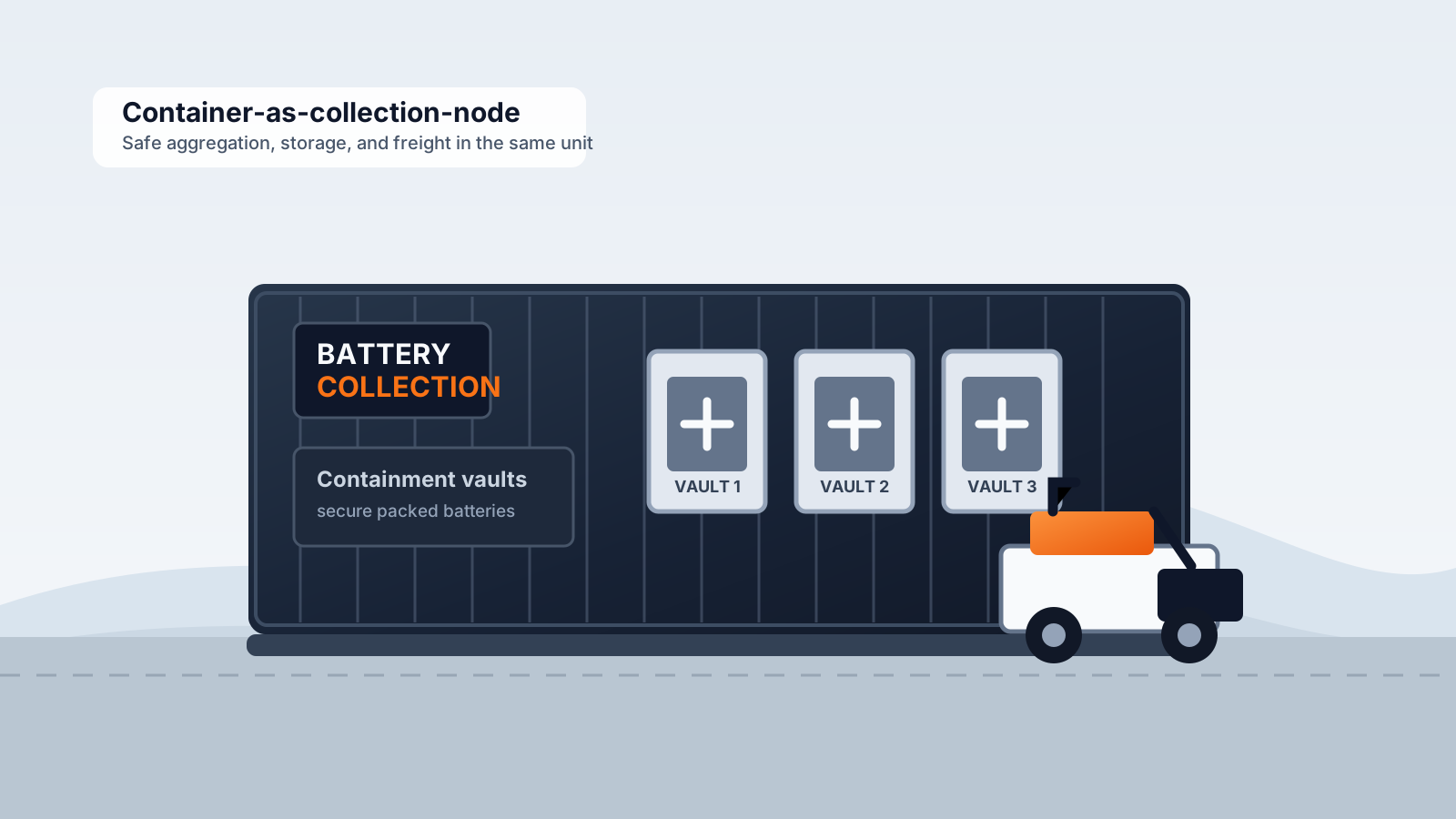
The useful part is the architecture. CEVA is putting used batteries into containment vaults, then placing those vaults inside adapted shipping containers. The company says trained technicians handle packing and loading, and each project goes through technical and administrative review before it ships. The service started in March 2026 on CMA CGM shipping lines with five adapted containers and 30 tonnes of combined capacity.
Maritime is a hard lane for used lithium-ion batteries. Long dwell times, port rules, mixed cargo, cross-border paperwork, and limited emergency response options all make the safety case harder. So if CEVA has a workable model for ocean freight, the model is worth studying for more than ocean freight.
The container can be the spoke
Battery reverse logistics has an awkward shape. The batteries are worth recovering. They are also difficult to store, regulated to move, and scattered across places that may only see meaningful volume a few times a year. That makes traditional spoke infrastructure a tough sell. A permanent battery collection building in every market sounds clean on a map, but the utilization may not be there.
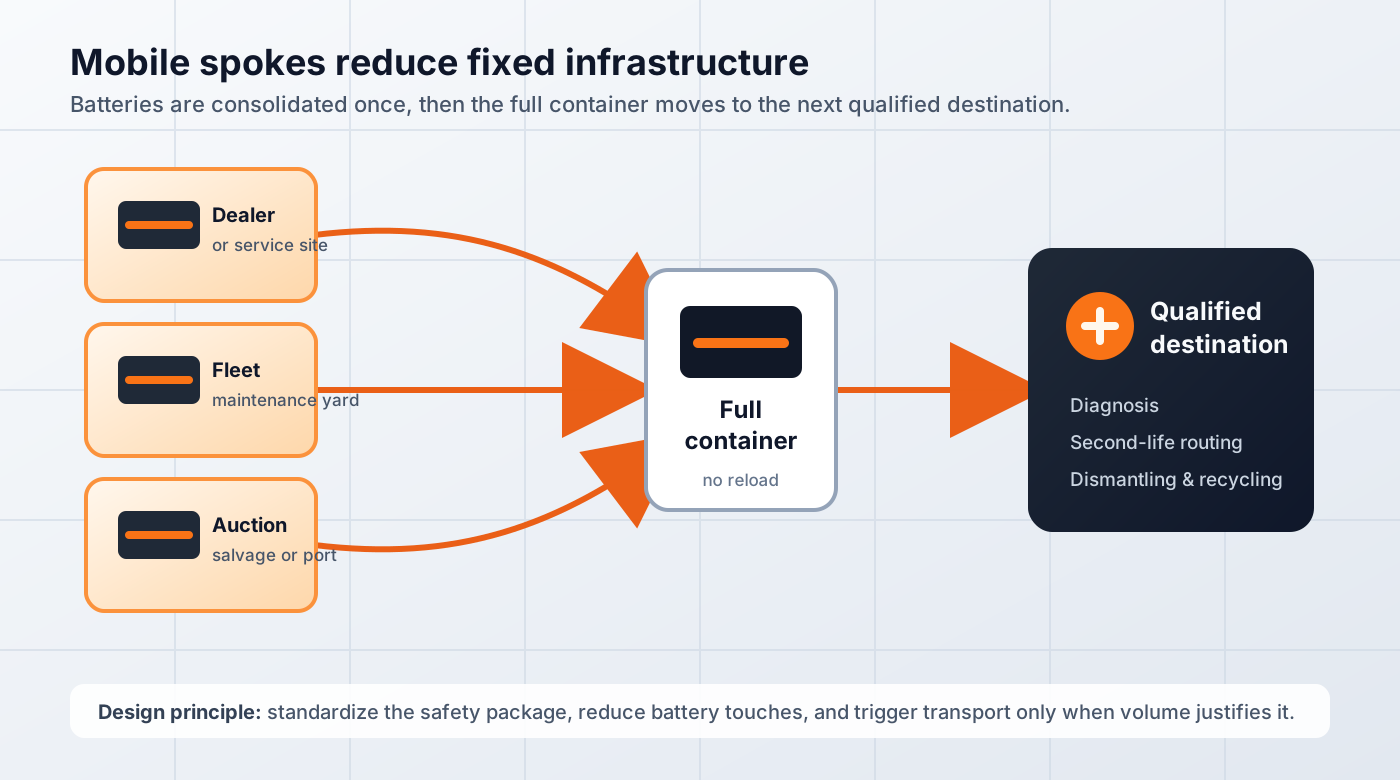
A standardized battery container changes that. You can place the collection asset where batteries are likely to appear: a dealership group, fleet maintenance yard, auction facility, salvage operator, port, island community, utility site, or regional service center. Batteries can be loaded into the containment system over time, within the site's safety and permitting limits. When the container is full, or when dwell time or battery condition says it should move, it moves.
Why fewer touches matter
Every extra handoff adds cost and risk. A used EV or hybrid battery can be removed from a vehicle, staged, repackaged, moved to a local warehouse, repacked again, loaded into a truck, transferred to another facility, and only then sent to a recycler or second-life evaluator. Each step needs people, space, equipment, training, inspection, and paperwork.
The containerized model is appealing because it removes some of that churn. A battery is identified, condition-screened, documented, and placed into the containment system once. After that, the same unit can serve as storage and transport packaging. The container can move by road, rail, or sea without reopening the battery handling process at every intermediate stop.
What operators get
Fewer reloads, fewer facility handoffs, simpler pickup triggers, and transport cost that matches accumulated battery volume instead of one-off emergencies.
What safety teams get
A repeatable containment design that can be trained, audited, documented, and improved across multiple collection locations.
This is especially useful where volume is uneven
Many end-of-life battery streams will not behave like factory output. They will come in uneven waves: a few damaged packs after storms, a cluster from auction returns, a dealer campaign, a fleet refresh, a warranty recovery program, or a retirement cycle in a remote market. A fixed spoke needs enough throughput to pay for itself every month. A mobile spoke can wait for the batteries.
That is why CEVA's island use case is interesting. Islands are an extreme case, but the pattern is familiar: batteries pile up far from the places that can diagnose, dismantle, redeploy, or recycle them. You see versions of this in rural areas, fleet depots, equipment yards, ports, construction and mining markets, and any region where the volume is real but intermittent.
Containerization is not a shortcut around safety
A container alone does not make battery logistics safe. The program still needs intake rules, battery identification, condition assessment, damaged-battery escalation, separation requirements, fire-safety planning, site permits, trained loading, documentation, chain of custody, and clear responsibility for the moment a battery changes hands.
That is the useful lesson from CEVA's announcement. This is not just a box. It is a managed system: vaults inside adapted containers, expert technicians, technical and administrative review, and transport declarations. The hardware matters, but the process around the hardware matters just as much.
A practical end-of-life model
- Place the container at a qualified origin site where battery volume is expected.
- Screen each battery for identity, chemistry, physical condition, ownership, and transport status.
- Load into containment using trained personnel and a repeatable work instruction.
- Track fill level and risk profile so pickup is triggered by capacity, dwell time, or battery condition.
- Move the sealed logistics unit to a battery logistics center, second-life evaluator, dismantler, or recycler.
- Avoid unnecessary rehandling until the container reaches the facility equipped to process the batteries.
For many end-of-life applications, this is a better fit than overbuilding fixed collection hubs. The network can scale with actual battery flow. Safety procedures stay more consistent. Transportation becomes part of the operating model instead of a scramble after the batteries are already sitting somewhere.
What I would take from this
CEVA's maritime solution is aimed at island territories that need a compliant route to mainland European recycling and processing capacity. But I would not file it away as only an island logistics story. It is also a good example of how end-of-life battery collection could work in places where volumes are scattered and fixed infrastructure is hard to justify.
The important shift is simple: standardize the safety package, reduce battery touches, and move the whole unit when it is ready. Recycling gets most of the attention, but collection is where a lot of the system either works or breaks.
For the policy question that starts after shredding, see ARC's black-mass export order explainer.
Sources: Logistics Manager and CEVA Logistics.
Design the battery handoff before volume arrives
End-of-life battery programs need more than recycling capacity. They need identification, routing, collection standards, documentation, partner workflows, and safe aggregation models before the volume arrives.