How to Identify EV Battery Packs by VIN and Labels
A field workflow for recycling teams to verify whether a vehicle is BEV, PHEV, or HEV, then confirm the battery pack using VIN decode data, OEM labels, part numbers, and photo evidence.
Need to identify a pack today?
Decode a VIN, verify electrification type, and connect the result to battery records, labels, photos, and value context in Explorer.
EV battery pack identification is the process of using vehicle data, pack labels, part numbers, and photos to confirm what high-voltage battery a recycler is looking at. For a recycling team, the goal is not just to name the vehicle. The goal is to verify the electrification type, narrow the pack candidate, confirm the physical battery, and route it with the right value, handling, and documentation context.
A VIN is usually the fastest place to start. It can identify the vehicle's make, model year, body, fuel type, and electrification information when the manufacturer has reported those details through a decoder. But VIN-based battery verification should not stop there. Removed packs, repaired vehicles, missing labels, title errors, and prior battery swaps all create situations where the VIN and the pack in front of the team may not fully match.
Quick answer
To identify an EV or hybrid battery pack, use three evidence layers: decode the VIN to verify the vehicle and electrification type, read the battery label for OEM part numbers and pack specifications, then match photos of the housing, connectors, cooling ports, labels, and condition against a trusted battery reference record.
EV battery identification field checklist
The three-evidence rule
The most reliable field process uses three evidence layers. Each one answers a different question:
Evidence source: VIN
Confirms: Vehicle identity, model year, fuel type, electrification level, and vehicle variant.
Cannot prove alone: The exact loose pack identity after swaps, removals, or incomplete upstream data.
Routing impact: Narrows the likely battery family and flags BEV, PHEV, HEV, or FCEV handling paths.
Evidence source: Pack label
Confirms: OEM part number, serial number, supplier code, voltage, capacity, chemistry, date code, and warning labels when present.
Cannot prove alone: Current condition, hidden internal damage, or whether every module inside is original.
Routing impact: Supports value matching, inventory naming, hazardous material classification, and buyer documentation.
Evidence source: Photos
Confirms: Pack shape, housing, connectors, cooling ports, mounting points, visible damage, and label legibility.
Cannot prove alone: Definitive internal chemistry or state of health unless paired with reliable data or testing.
Routing impact: Lets remote buyers, operations managers, and safety teams review the same evidence.
Step 1: Capture the VIN before the vehicle is dismantled
Start with the 17-character VIN while the vehicle is still identifiable. The windshield VIN plate, driver door jamb certification label, title, registration, auction record, yard management record, and insurer file are common sources. Capture a photo of the VIN location, not just a typed value. A transposed character can send the team down the wrong pack path.
For a first-pass decode, use the free VIN decoder in Explorer. It is built for recycling workflows where a VIN needs to become vehicle, electrification, and battery context in the same record. A generic VIN decode can identify the vehicle, but recycling teams need the VIN result tied to pack candidates, labels, photos, and routing notes.
For software workflows, ARC also exposes VIN decode and Explorer-by-VIN API documentation so intake systems can use the same verification path programmatically.
For batch intake, API enrichment, or yard-management workflows, a VIN decoder should normalize at least these fields:
- VIN, model year, make, model, trim, and body type.
- Primary and secondary fuel type.
- Electrification level, such as BEV, PHEV, HEV, or FCEV.
- Battery energy, voltage, battery type, modules per pack, cells per module, and packs per vehicle when available.
- Decode confidence, errors, and whether the result is complete enough for routing.
For recycling operations, the useful output is not just a decoded vehicle name. The intake record should preserve electrification level, fuel context, likely battery candidates, chemistry, energy, voltage, pack notes, photo references, and any confidence flags that affect routing.
Step 2: Verify the electrification type
Hybrid vehicle identification matters because a standard hybrid, plug-in hybrid, and battery-electric vehicle usually have different pack sizes, locations, chemistry patterns, handling requirements, and value drivers. A recycler should classify the vehicle before assigning labor, storage, buyer outreach, or quote assumptions.
| Electrification type | What to expect | Field checks |
|---|---|---|
| BEV | Battery-electric vehicle with no gasoline engine and a large traction battery. | Charge port, underbody pack, orange high-voltage cabling, no exhaust system. |
| PHEV | Plug-in hybrid with an engine, charge port, and larger battery than a non-plug hybrid. | Charge port plus fuel door, underbody or rear pack, VIN decode showing electric and gasoline context. |
| HEV | Hybrid vehicle with an engine and traction battery that usually does not plug in. | Hybrid badging, no external charge port, rear-seat or cargo-area battery location on many older models. |
| FCEV | Fuel cell electric vehicle with hydrogen fuel storage and electric drive. | Hydrogen labels, fuel cell components, high-voltage battery, and model-specific response guide. |
If the VIN decode says the vehicle is electric or hybrid but the physical vehicle evidence disagrees, stop and reconcile the record. The wrong classification can affect quoted value, storage location, dismantling method, paperwork, and buyer expectations.
Step 3: Read the battery pack label
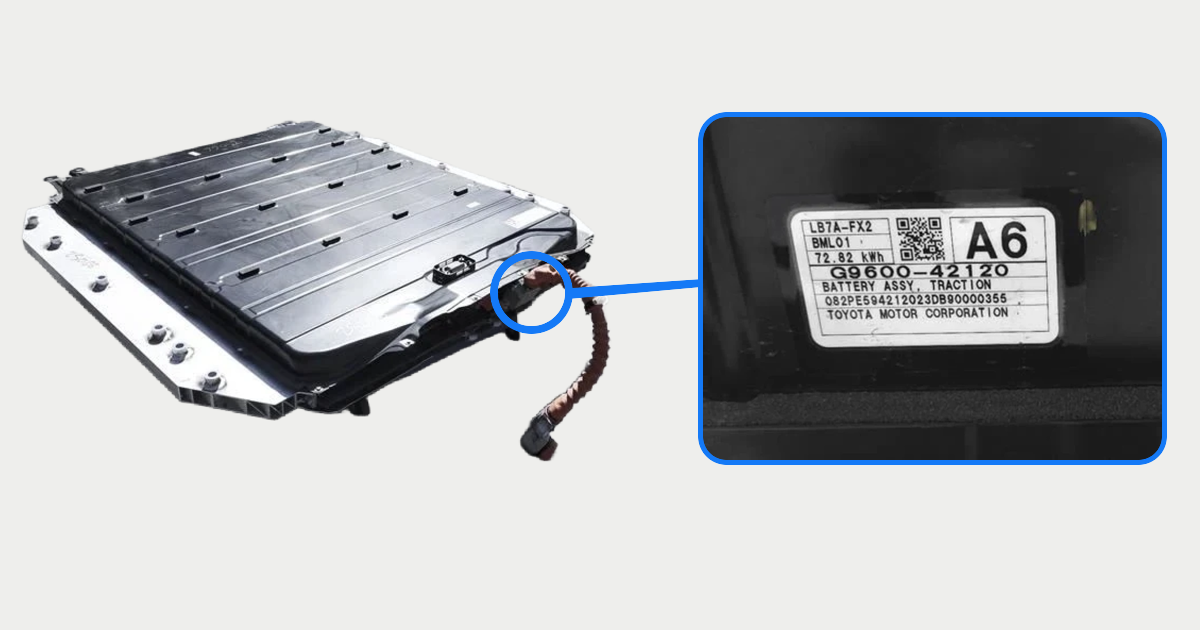
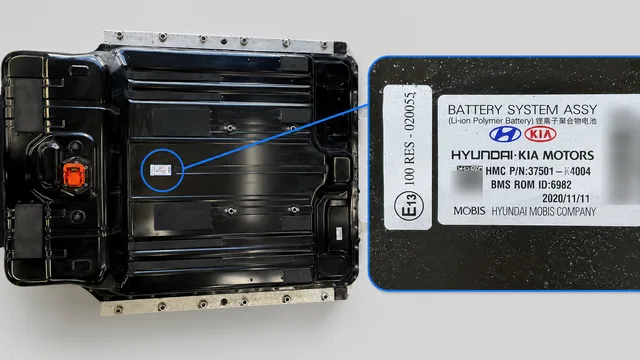
Once the pack is visible and safe to inspect, the label becomes the most important physical evidence. Some labels are on the top cover, side rail, service plug area, or connector side. Others may be partly hidden by trays, brackets, covers, road debris, corrosion, or collision damage. If the pack is loose, photograph all visible sides before cleaning or moving it again.
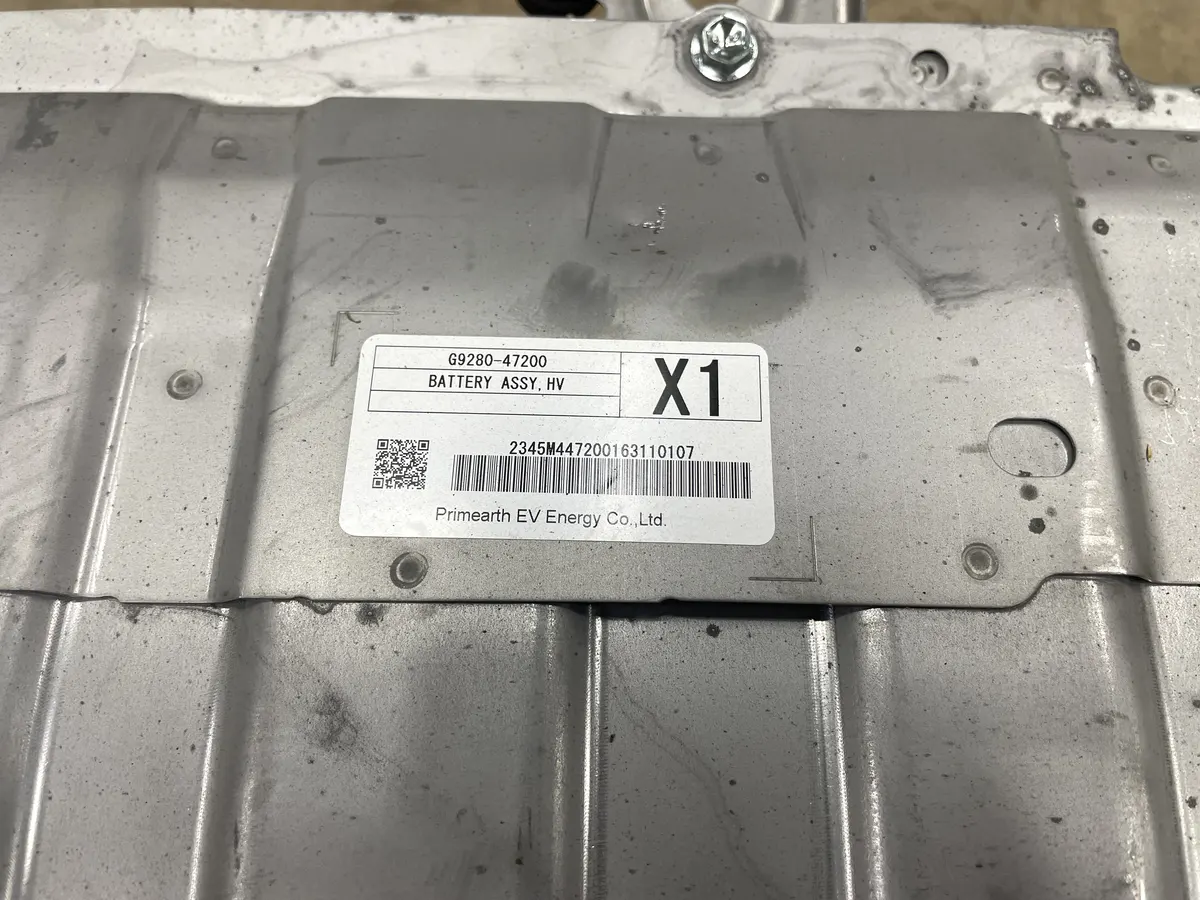
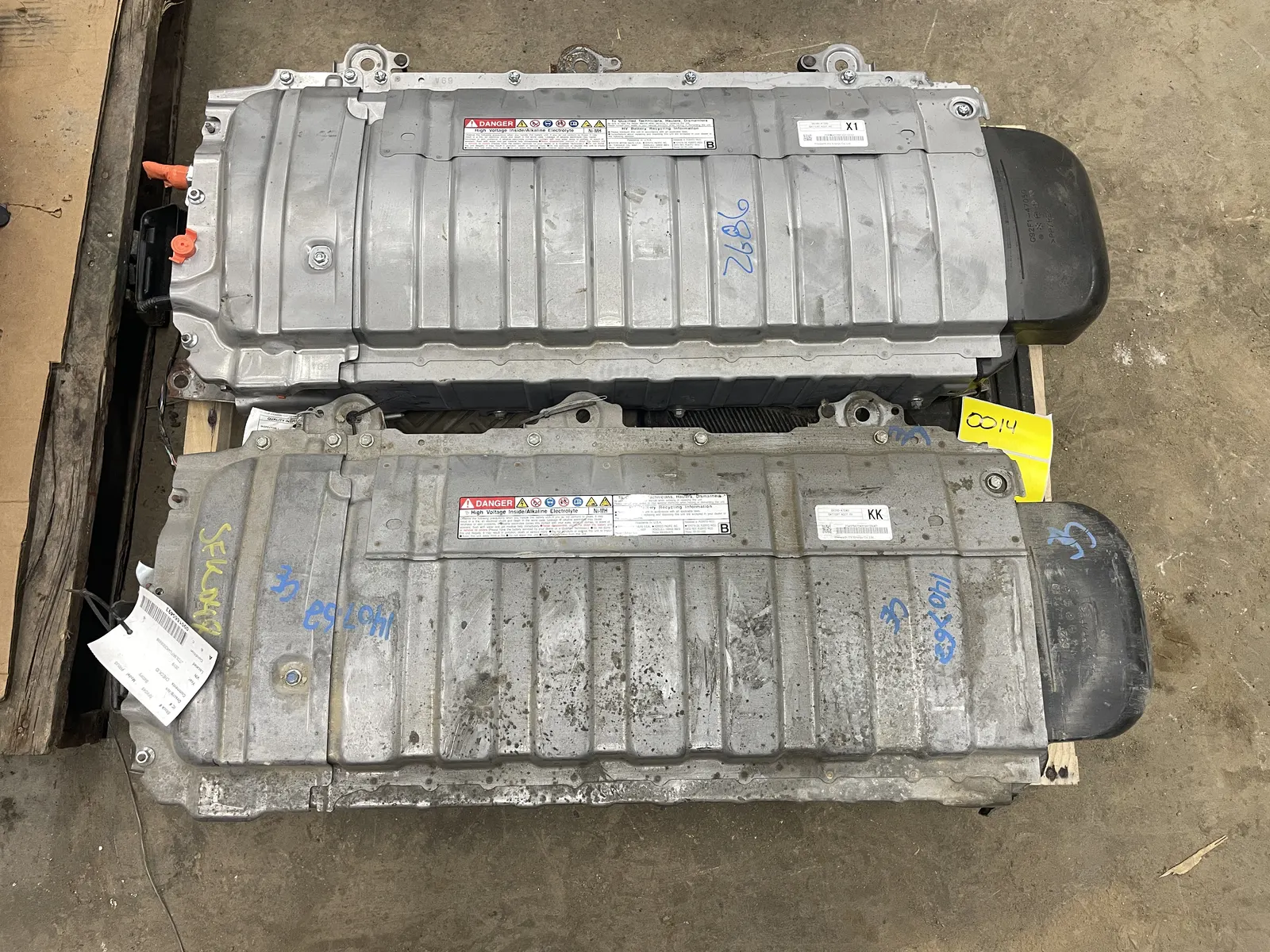
Example identification
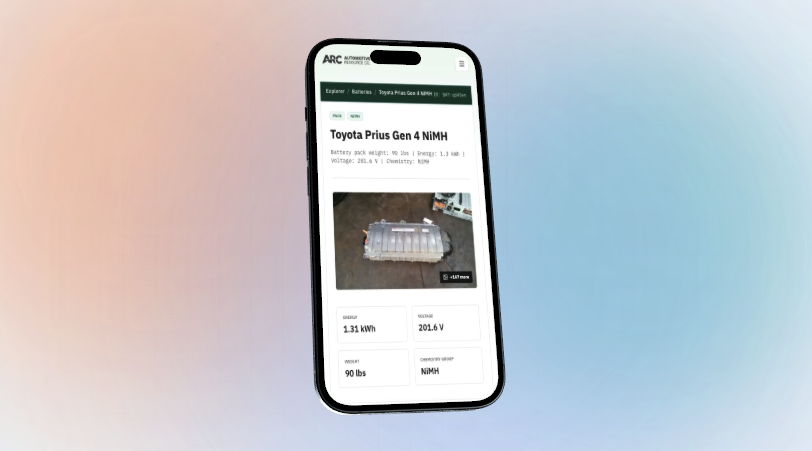
This pack is a Toyota Prius Gen 4 NiMH hybrid battery.
The label and pack photos point to a fourth-generation Toyota Prius nickel-metal hydride battery pack. In Explorer, the battery record ties the pack identity to platform fitment, chemistry, label evidence, and visual references so a recycler can move from a loose core on a pallet to a documented battery record.
View the matched record: Toyota Prius Gen 4 NiMH battery in Explorer.
A useful label capture should include:
- OEM part number, assembly number, replacement part number, and supersession markings.
- Serial number, QR code, barcode, lot code, supplier name, and date code.
- Voltage, capacity, energy rating, battery chemistry, and cell/module configuration when listed.
- High-voltage warnings, hazardous material markings, transport labels, and service plug instructions.
- Any VIN, model family, or vehicle application printed on the pack label.
Do not rely on one partial part number if the pack family has multiple variants. Use a separate EV battery pack part number lookup workflow when the service number, engineering number, label number, and interchange number do not line up cleanly. Some models have different battery capacities, suppliers, drive-unit configurations, chemistries, or cooling designs across model years and trims. For valuation, those differences can matter more than the vehicle name.
Step 4: Use photos to confirm the pack visually
EV battery recognition from photos works best when the photos are repeatable. The goal is to give the desk team, buyer, safety lead, or API workflow enough evidence to compare the pack against known visual references.
Required exterior photos
- Full pack from top, bottom if accessible, and each side.
- Close-up of every label, QR code, serial number, and warning marking.
- High-voltage connectors, low-voltage connectors, coolant ports, venting, and service disconnect area.
- Mounting points, brackets, rails, shields, and any cut or damaged areas.
Condition photos
- Impact points, bent housings, punctures, swelling, leaks, corrosion, burns, or water exposure.
- Harness damage, missing service plugs, missing covers, cut cables, and exposed conductors.
- Module layout photos only if the pack is already opened by qualified personnel under the site's safety procedure.
- Scale reference, such as a tape measure or known pallet size, when the pack is loose.
Photo matching is especially useful when the vehicle is gone, the VIN is missing, the pack label is damaged, or several pack variants exist for the same model. It also gives commercial teams a cleaner way to document battery identity with VIN and physical evidence instead of relying on a model name alone.
Step 5: Connect identification to downstream value and routing
Battery identification establishes the pack record that a downstream valuation or routing decision uses. The VIN narrows the likely vehicle and pack family, while the label, part number, and photos confirm the physical battery. The outlet then determines which additional evidence matters.
When the outlet is material recovery, use ARC's guide to estimate EV battery scrap value by VIN. It carries the confirmed identity into chemistry, weight type, pack construction, condition, logistics, and current recycler terms.
If the pack has already moved into shredding, the compliance question changes. See ARC's black-mass order explainer for the definition of covered material and the restrictions on domestic sales and physical location.
| Value or routing factor | Evidence to collect | Decision impact |
|---|---|---|
| Electrification type | VIN decode, vehicle badges, charge port, fuel door, and response guide. | Sets the initial handling path and expected pack size. |
| Chemistry and energy | Pack label, battery data fields, part number match, and technical reference. | Supports material-value, reuse, and buyer-routing assumptions. |
| Physical condition | Photos, intake inspection, water/fire/collision notes, missing components, and isolation status when tested. | Changes safety handling, resale eligibility, packaging, and price confidence. |
| Market evidence | Observed listing ranges, buyer quotes, recent transactions, and internal sales history. | Improves quote confidence, but should not be treated as a guaranteed price. |
A practical workflow should assign a confidence level to each battery record. For example: high confidence when the VIN, label, and photos all agree; medium confidence when the VIN and photos agree but the label is missing; low confidence when the team has only year, make, and model or a partial label.
Step 6: Check safety references before handling or storage
Identification and safety should move together. NHTSA describes the traction battery as a high-voltage battery that is different from the 12-volt battery and should not be serviced without proper training and specialized equipment. NHTSA also publishes emergency response guides and rescue sheets for battery-electric, hybrid-electric, plug-in hybrid, and fuel cell vehicles.
The U.S. Department of Energy's Alternative Fuels Data Center notes that high-voltage power cables are typically designated with distinctive coloring or markings, usually orange, and that many manufacturers publish vehicle-specific emergency response guides. For recycling teams, that means the identification record should link to the right handling reference before removal, staging, transport, or storage.
What to do when the VIN is unavailable
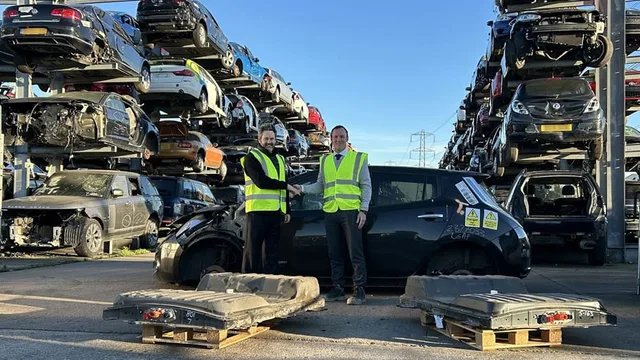
Loose packs often arrive without a vehicle. In that case, start with the pack label and photos, then work backward to likely vehicles. Use OEM part numbers, supplier codes, connector layout, pack housing shape, cooling-port location, mounting pattern, and module layout if safely visible. If the team knows only year, make, model, or auction listing text, treat the result as a candidate set until a label or photo match confirms the battery.
This is where recycling team tools should support more than one lookup mode. A good intake system should accept VIN, year/make/model, OEM part number, barcode, label text, and photo evidence. It should also preserve the original source of each claim so the commercial team can explain why a pack was valued or routed a certain way.
A simple field workflow for recycling teams
- Create the intake record. Record source, date, location, vehicle status, and whether the battery is installed or loose.
- Capture the VIN. Photograph the VIN plate or source document, then decode it through a trusted VIN workflow.
- Verify electrification. Classify BEV, PHEV, HEV, or FCEV and flag any conflict between decoded and physical evidence.
- Photograph the battery pack. Capture full pack, labels, connectors, cooling ports, service disconnect, mounting points, and condition issues.
- Extract label data. Enter OEM part number, serial number, voltage, energy, chemistry, supplier, and warning-label information when legible.
- Match to a battery record. Compare VIN, label, and photos against known vehicle-to-battery-to-cell data.
- Assign confidence. Mark high, medium, or low confidence based on evidence agreement and missing fields.
- Route the pack. Use identity, chemistry, condition, and market context to route for reuse, resale, remanufacturing, second-life evaluation, recycling, or special handling.
FAQ: EV battery pack identification
How do battery recyclers identify EV and hybrid battery packs from VINs, labels, and photos?
Battery recyclers identify EV and hybrid packs by using the VIN to verify the vehicle and electrification type, the battery label to capture part numbers and specifications, and photos to confirm the physical pack, connector layout, housing, labels, and condition. The strongest identification record has all three evidence layers agreeing.
How can recycling teams verify whether a vehicle is hybrid, plug-in hybrid, or battery electric from a VIN?
Use ARC's free VIN decoder in Explorer, then review electrification level plus primary and secondary fuel type. A BEV should resolve as battery electric or electric-only context. A PHEV should show electric and combustion context. An HEV should show hybrid context without external charging. Cross-check the result against physical evidence such as charge port, fuel door, high-voltage cabling, and model-specific response guides.
How does EV battery identification support a recycling value estimate?
Battery identification confirms which physical pack, part number, chemistry, and specifications belong in the estimate. The VIN narrows the candidates, while the label and photos confirm the installed pack before a recycler applies its weight type and current terms.
What photos should a yard team take for EV battery recognition?
Take a full pack photo from every accessible side, close-ups of all labels and barcodes, connector and cooling-port photos, mounting-point photos, service-disconnect photos, and clear condition photos showing damage, corrosion, missing components, cut cables, or water exposure.
What if the VIN decode and battery label do not match?
Treat the record as unresolved. The vehicle may have had a battery replacement, the pack may be loose from another vehicle, the VIN may have been entered incorrectly, or the decoder result may be incomplete. Hold the pack at a lower confidence level until a part-number, photo, or OEM reference match resolves the conflict.
Put this identification workflow into your intake process
Explorer helps recycling teams connect VIN decode results, battery records, label details, photo references, market context, and routing decisions in one workflow.
Need this workflow across a yard, batch, or system?
ARC can help map the identification process, data requirements, and integration path for recurring battery intake.
Discuss the workflow