How to Find an EV Battery Pack Part Number
A field workflow for recyclers, dismantlers, and battery lifecycle teams to reconcile VINs, physical pack labels, service part numbers, catalog listings, supersessions, interchange numbers, and photo evidence.
Need to identify a pack from a number or label?
Use Explorer to connect VIN context, pack records, label evidence, photos, fitment, chemistry, and routing context before pricing or listing the battery.
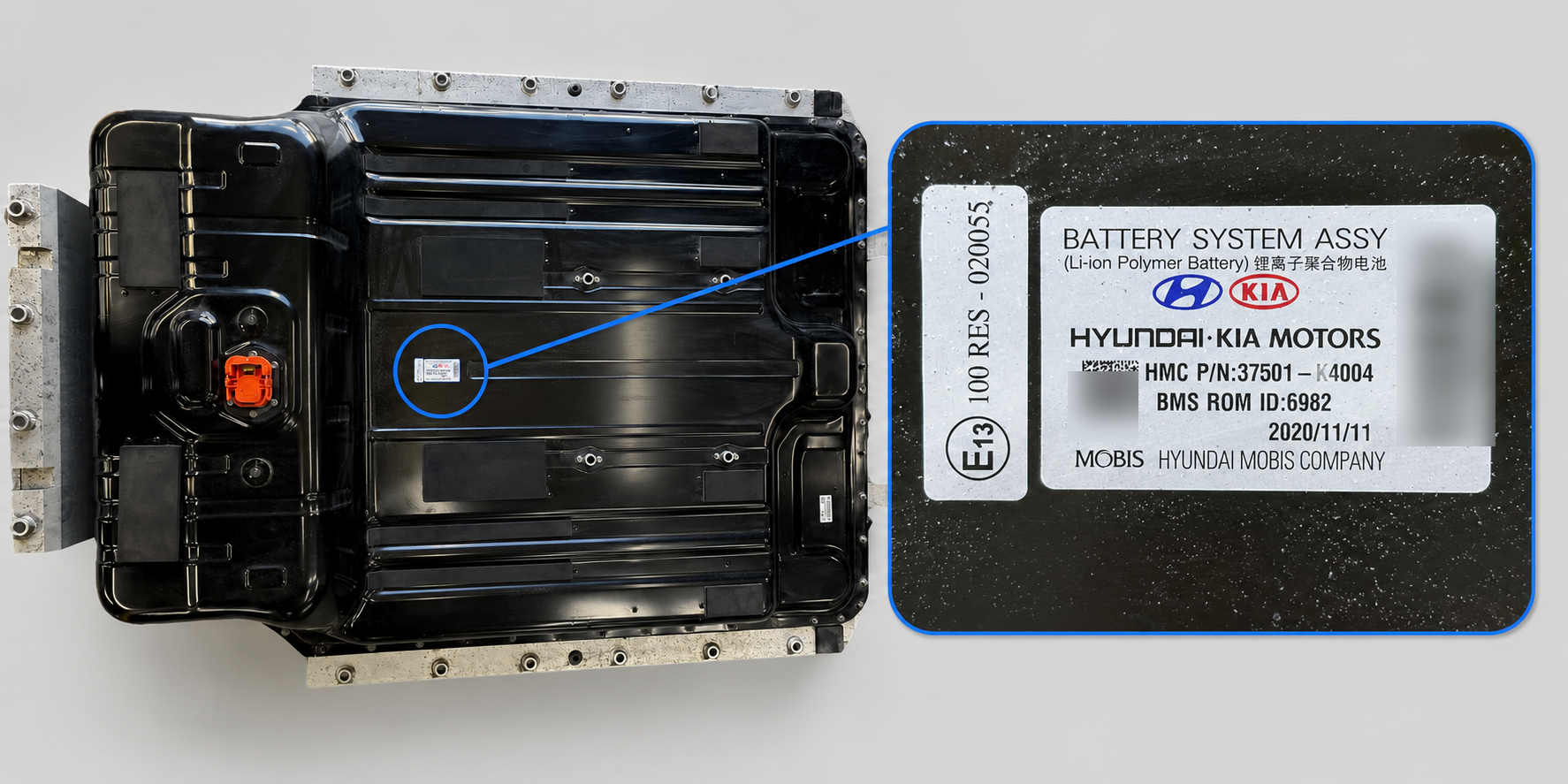
An EV battery pack part number lookup is not just a VIN search or a catalog search. For recyclers, dismantlers, core aggregators, and battery lifecycle teams, the practical job is to reconcile the vehicle record, the physical pack label, any service or catalog number, any interchange reference, and photos of the actual battery.
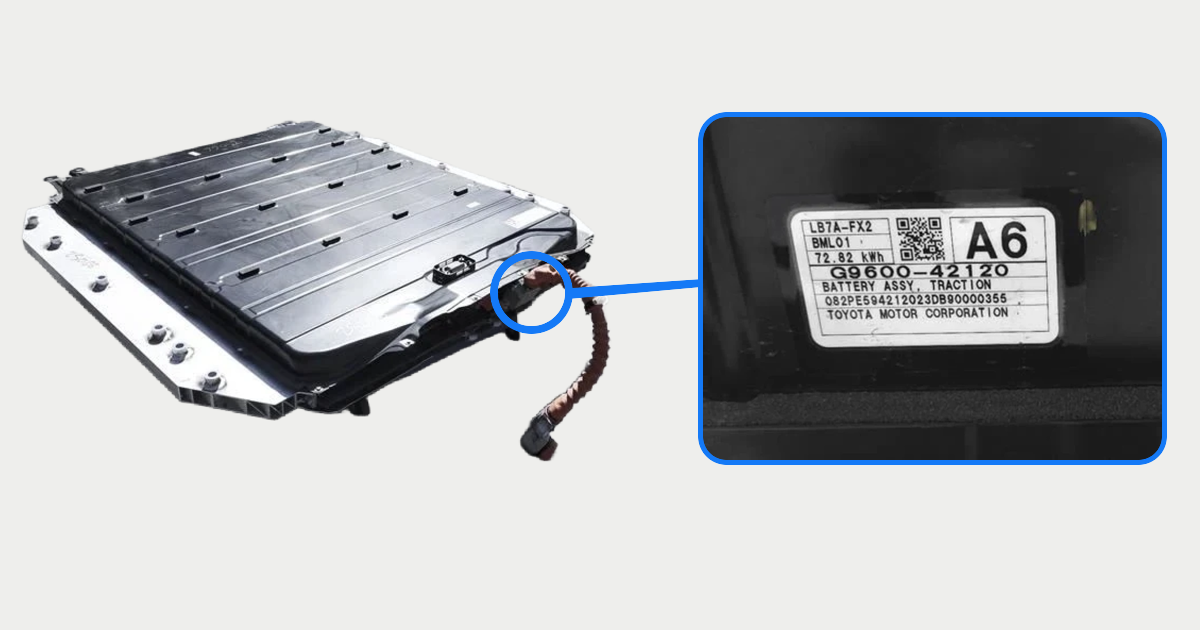
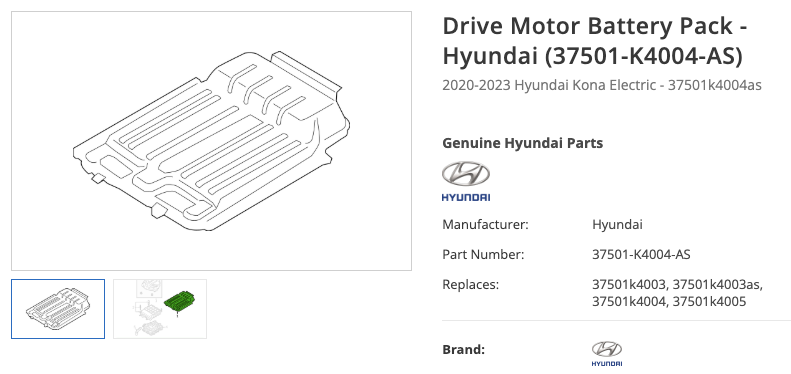
That matters because the number printed on the battery label may not match the number shown in an online parts catalog. The catalog number is often a service or replacement part number. The label may show an engineering, assembly, supplier, manufacturing, or revision number. Both can be useful, but they answer different questions.
Use this as the part-number companion to ARC's guide on how to identify EV battery packs by VIN and labels. The VIN/label article covers the three-evidence identification workflow; this article goes deeper on what to do when the service number, catalog number, label number, and interchange number do not line up cleanly.
When the next question is whether shredded battery material can be exported, see ARC's U.S. black-mass order explainer.
Quick answer
To find an EV battery pack part number, start with the VIN or year/make/model to narrow the likely pack family, then read the physical battery label for engineering, assembly, serial, barcode, supplier, voltage, energy, and chemistry details. Compare the label number against service/catalog part numbers, supersession history, interchange references, and pack photos before pricing, routing, listing, or ordering a replacement.
The number on the label may not be the number in the catalog
The most common mistake is assuming "part number" means one universal identifier. In real battery intake, "part number" can mean several things.
VIN
Usually appears: Windshield plate, door jamb, title, auction record, yard inventory.
Helps answer: What vehicle the pack likely came from.
Does not prove alone: The exact installed pack after replacement, swap, or loose-pack movement.
Service/catalog part number
Usually appears: OEM parts catalog, dealer system, online parts page, invoice.
Helps answer: What replacement part or service family may be orderable.
Does not prove alone: The exact number printed on the original pack label.
Engineering/assembly/label number
Usually appears: Physical battery pack label, barcode label, module label, supplier label.
Helps answer: What was built, revised, labeled, or assembled.
Does not prove alone: Whether a current catalog number has superseded it.
Serial, lot, supplier, or date code
Usually appears: Physical label, QR code, barcode.
Helps answer: Traceability for the exact unit, production timing, supplier, or batch context.
Does not prove alone: Broad vehicle fitment or replacement compatibility.
Interchange or IC number
Usually appears: Recycler inventory systems, salvage listings, interchange databases.
Helps answer: Recycler-style compatibility grouping.
Does not prove alone: OEM service equivalency or exact engineering revision.
ARC battery record
Usually appears: Explorer, ARC API, internal intake workflow.
Helps answer: Pack family, fitment, chemistry, specs, photos, confidence context.
Does not prove alone: Physical condition or hidden internal damage without inspection/testing.
Part number vs serial number
A part number answers: what part is this? A serial number answers: which individual item is this?
In practical battery intake, ten packs from the same service family may share the same service/catalog part number. A group of packs from the same design revision may share an engineering or assembly number. But each physical pack can still have its own serial number, lot code, date code, barcode payload, or supplier traceability value.
| Identifier | Plain-English question | Useful for | Do not use it alone for |
|---|---|---|---|
| Part number | What part, pack family, service family, or revision is this? | Catalog lookup, fitment candidate matching, service equivalency, inventory grouping. | Proving which exact physical unit is in front of you. |
| Serial number | Which exact unit is this? | Traceability, warranty or service review, recall research, chain-of-custody notes, production timing. | Broad compatibility, replacement fitment, chemistry, or pack-family assignment. |
| Lot, supplier, or date code | When, where, or by whom was this unit or batch produced? | Batch review, supplier context, production-date context. | Orderable replacement identity. |
| Barcode or QR payload | What data is encoded on the label? | Preserving raw label evidence and decoding structured fields when possible. | Assuming the encoded value is a part number without decoding or source context. |
A useful rule for field teams: if two packs have the same part number, they may be the same type of part. If they have the same serial number, something is wrong unless one record is a duplicate of the same physical pack.
Service part numbers vs engineering part numbers
A service part number or catalog part number is the number used to order, sell, or list a replacement part. An engineering part number is often closer to the number used to design, manufacture, assemble, revise, or label the physical part.
| Pattern | What it can mean | Operator action |
|---|---|---|
| Label number differs from catalog number | The pack label may show an engineering or assembly number while the catalog shows an orderable service number. | Store both numbers and cross-reference them before making a compatibility claim. |
| Old service number replaced by a new service number | The OEM or parts catalog may have superseded the replacement part. | Preserve the old number, current number, and source/date of the supersession. |
| Many label numbers map to one service family | Running production changes, supplier revisions, date breaks, or plant changes may roll up to a service replacement family. | Treat the service number as an equivalency claim only for the supported subset. |
| One vehicle has multiple possible packs | Trim, drive configuration, model year, capacity, chemistry, supplier, or market can change the pack. | Use VIN, labels, photos, and fitment evidence before assigning high confidence. |
| Recycler listing uses an interchange number | The inventory system may group compatible applications for salvage workflows. | Keep the interchange number separate from OEM service and label numbers. |
Plain English rule
If the number is printed on the physical pack, preserve it as field evidence. If the number comes from a catalog, preserve it as catalog or service evidence. If a source says they are equivalent, record the source and confidence instead of overwriting the label number.
How to find an EV battery pack part number
- Create the intake record. Record source, date, seller, location, whether the pack is installed or loose, and who captured the evidence.
- Capture the VIN or year/make/model. Photograph the VIN plate or source document when available. If the pack is loose, record any claimed source vehicle separately from verified evidence.
- Decode the vehicle context. Use VIN decode to identify the vehicle, model year, make, model, electrification level, fuel context, and candidate pack family.
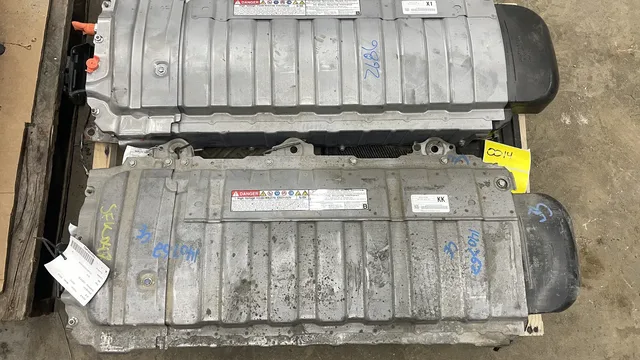
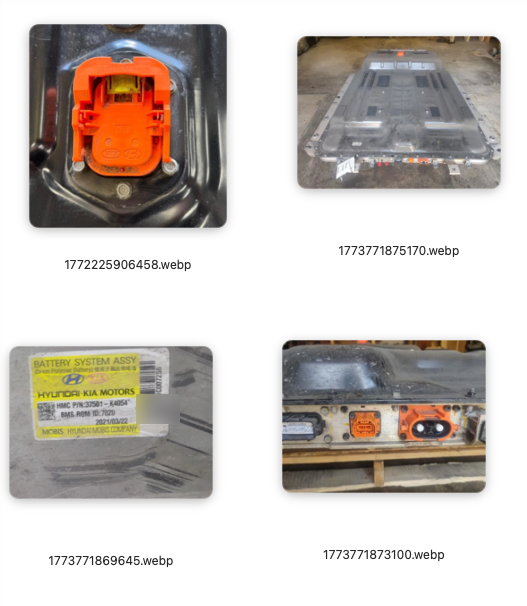
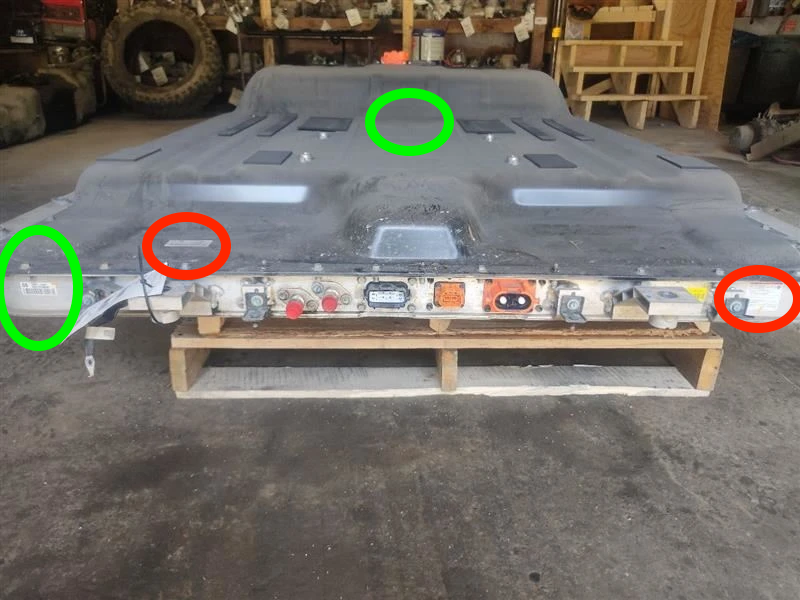
- Photograph the complete pack. Capture all visible sides, connector faces, cooling ports, mounting points, service disconnect area, damage, and label locations.
- Read every label. Capture OEM label text, engineering number, assembly number, serial number, barcode, QR code, supplier, date code, voltage, energy, chemistry, and warning markings when visible.
- Separate the number types. Do not put VIN, service number, engineering number, serial number, interchange number, and barcode into one undifferentiated field.
- Cross-reference service/catalog numbers. Compare the label number against OEM parts catalog results, invoices, replacement part listings, and supersession references.
- Check interchange and fitment. Use recycler interchange evidence, ARC fitment data, and photo matching to verify which vehicle and pack family the battery belongs to.
- Assign confidence. Mark high confidence when VIN, label, catalog/service evidence, and photos agree. Use medium or low confidence when any layer is missing, partial, or conflicting.
- Route with the evidence attached. Pricing, resale, remanufacturing, recycling, storage, and transport decisions should carry the original evidence record forward.
What a VIN can tell you, and where it stops
A VIN is usually the fastest place to start because it anchors the record to a vehicle. Under 49 CFR Part 565, a VIN is a 17-character vehicle identification number with defined positions, check digit requirements, model-year coding, manufacturer identifiers, and vehicle attributes. Decoding those positions gives you the vehicle's year, make, model, and build attributes, which is the context you need before you look at the pack. ARC's Explorer-by-VIN API pairs the vehicle decode with battery enrichment when the data supports a pack match.
But a VIN is not a physical pack label. It does not prove that the battery in front of you is still the original pack installed at the factory. It also does not prove that a loose pack still belongs to the vehicle record attached to it in a spreadsheet or auction listing.
Use VIN decode to answer
- What vehicle context should this pack be compared against?
- Is the vehicle BEV, PHEV, HEV, FCEV, or ambiguous?
- What candidate pack families are plausible?
- What fields are missing or low-confidence?
Do not use VIN decode alone to answer
- What exact engineering number is printed on the pack label.
- Whether the pack was replaced under warranty or recall.
- Whether the physical pack is damaged, missing components, opened, or internally changed.
- Whether a current catalog service number covers this exact label number.
When the VIN is unavailable, use Explorer lookup by year/make/model or a manual Explorer search as a candidate-finding step, not as final proof. This is especially relevant for core aggregators identifying loose battery packs when the VIN is gone.
What to photograph before looking up the number
Part-number research gets much easier when the photo set is complete. This is the same evidence discipline used in ARC's broader EV battery pack identification workflow: the label tells part of the story, but the pack shape, connectors, cooling ports, damage, and surrounding context make the record defensible.
| Photo | Why it matters |
|---|---|
| Full pack from each visible side | Confirms housing shape, scale, mounting points, and whether the label belongs to that pack. |
| Main barcode or QR label | Captures engineering, assembly, serial, supplier, date, and barcode fields. |
| Connector face | Helps distinguish similar pack families and variants. |
| Cooling ports and plumbing | Helps identify thermal-system differences and fitment variants. |
| Damage and missing components | Affects value, handling, resale eligibility, and confidence. |
| Shipping or recycler tags | May expose interchange, inventory, prior owner, or handling information. |
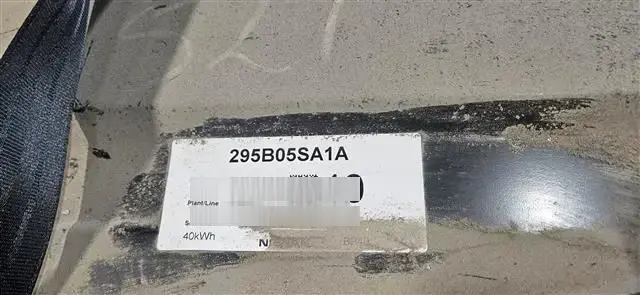
If the pack needs to be moved, stored, opened, or routed, pair the identification record with your site safety process and ARC's practical guide to handling EV and hybrid batteries.
How to handle service/catalog equivalency
Once you have a physical label number, the next step is to test whether it maps to a service/catalog number or replacement family. The key operational rule is simple: equivalency belongs in its own field. It should not erase the number printed on the battery.
| Field | Example entry format | Notes |
|---|---|---|
| Original label number | label_number: as printed | Preserve punctuation, spaces, prefixes, and suffixes. |
| Label type | engineering / assembly / serial / barcode / unknown | Do not guess if the label does not say. |
| Service/catalog number | service_part_number: catalog result | Source it from a catalog, invoice, OEM listing, or supplier record. |
| Supersession | old to current, source, date accessed | Preserve both old and current values. |
| Interchange evidence | IC/interchange number, source, compatibility notes | Do not relabel it as an OEM part number. |
| Confidence | high / medium / low | Explain why. |
Common mismatch scenarios
The catalog number is a service replacement
A catalog listing may show the orderable replacement part. The pack in front of you may show an engineering or assembly number from the original production part.
The part was superseded
Parts catalogs and service systems may replace an older service number with a newer one. Keep the full chain when you have it.
The pack family has production revisions
Battery packs can change through running revisions, suppliers, model years, cooling layouts, BMS variants, chemistry changes, service campaigns, or plant differences.
The vehicle had a battery replacement
The VIN may point to the original vehicle but not the original factory-installed pack. This is one reason the physical label matters.
The marketplace uses a broad interchange number
Recycler and salvage systems often use interchange-style numbers to group compatible inventory. That is useful for finding candidates, but it is not the same as an OEM engineering number or service part number.
The label is partial or damaged
If only a partial number is visible, mark it partial. Do not fill in missing characters unless a source supports the completion.
Part number lookup confidence levels
| Confidence | Evidence pattern | Action |
|---|---|---|
| High | VIN/YMM, label number, service/catalog equivalency, photos, and fitment all agree. | Use for pricing, listing, routing, or buyer communication with source notes attached. |
| Medium | Two or three evidence layers agree, but one key field is missing or the label is partial. | Use for candidate matching, but flag before final quote or compatibility claim. |
| Low | Only YMM, seller text, partial listing, or a broad interchange number is available. | Treat as unresolved until label, photo, VIN, or catalog evidence improves. |
| Conflict | VIN, label, photos, or catalog evidence disagree. | Hold record for review and preserve all conflicting evidence. |
Data fields every battery intake system should keep
If your team handles EV and hybrid packs regularly, create explicit fields instead of a single "part number" box. This helps teams avoid replacing the messy truth with one clean-looking number.
| Field | Why it matters |
|---|---|
| vin | Anchors the vehicle record when available. |
| original_label_text | Preserves the exact visible label text. |
| engineering_or_assembly_number | Stores the physical-pack number when identified. |
| service_catalog_part_number | Stores the orderable or replacement number. |
| interchange_number | Stores recycler compatibility grouping separately. |
| photo_references | Ties every claim back to the actual pack. |
| confidence_level | Prevents low-evidence records from being treated as definitive. |
| source_notes | Shows whether the claim came from VIN decode, label, catalog, seller, listing, or human review. |
For battery recyclers, those fields support better quote discipline because chemistry, gross pack weight, cell weight, condition, and confidence all affect the purchasing decision. For core buyers and dismantlers, the same structure makes inventory notes and buyer communication more defensible.
When a confirmed pack is headed to material recovery, continue with ARC's workflow to estimate EV battery scrap value by VIN. The recycler still needs chemistry, its accepted weight type, pack construction, condition, logistics, and current terms.
Where ARC fits
Explorer
ARC is built for the messy middle of battery identification.
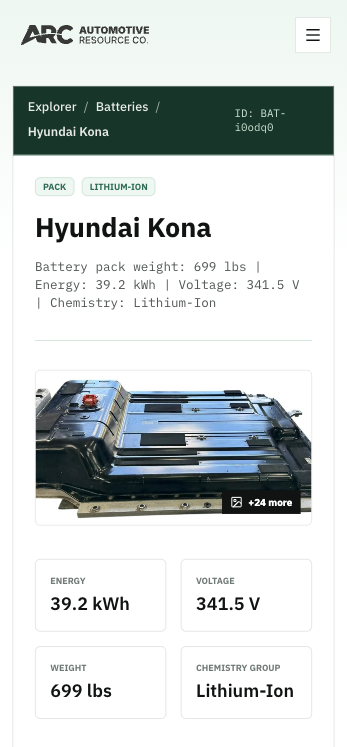
Explorer helps teams connect VIN decode, battery records, fitment, chemistry, specifications, visual references, labels, photos, and market context. The Data API supports software workflows where VINs, year/make/model, battery candidates, and enrichment need to move into intake tools, inventory systems, pricing workflows, or buyer-facing applications.
- What battery family is this likely to be?
- What vehicle context does the VIN support?
- What chemistry, hazard, weight, or fitment fields are available?
- What photos and labels should my team compare against?
- Does the current evidence support a confident routing or quote decision?
Put part-number lookup into your intake process
Use Explorer to connect VIN context, pack records, label evidence, photos, fitment, chemistry, and routing context before pricing or listing the battery.
Need this workflow across a yard, batch, or system?
ARC can help map the identification process, data requirements, and integration path for recurring battery intake.
Discuss the workflowFAQ: EV battery pack part number lookup
What is an EV battery pack part number?
An EV battery pack part number is an identifier used to describe, order, build, label, or cross-reference a high-voltage battery pack. In field workflows, the phrase can refer to a service/catalog part number, engineering number, assembly number, label number, or interchange number. Serial numbers and barcode values are often captured from the same label, but they should be stored separately because they answer different questions.
Is a serial number the same as a part number?
No. A part number identifies the part, pack family, service family, engineering revision, or catalog item. A serial number identifies one exact physical unit. Use the part number for candidate matching and service/catalog comparison. Use the serial number for traceability, production context, warranty or recall research, and chain-of-custody notes.
Can I find the exact battery pack part number from a VIN?
A VIN can narrow the vehicle, model year, electrification type, and likely battery family. It does not automatically prove the exact physical pack label number, especially if the battery was replaced, swapped, removed from the vehicle, or listed separately from the source vehicle. Use the VIN as the starting point, then verify the label and photos.
Why does the number on the EV battery label not match the online part number?
The label may show an engineering, assembly, manufacturing, supplier, or revision number. The online listing may show a service or catalog part number used to order a replacement. Those numbers can differ even when the catalog number is compatible with the label-number family.
What is the difference between a service part number and an engineering part number?
A service part number is usually the orderable replacement or catalog number. An engineering part number is usually tied to the design, assembly, manufacturing, or revision of the physical part. Battery intake records should preserve both when both are available.
Should I overwrite an old part number with the current superseded number?
No. Preserve the original number and store the current superseded or replacement number as a linked field. Old numbers still matter for labels, invoices, salvage listings, buyer communication, and historical records.
Is an interchange number the same as an OEM battery pack part number?
No. An interchange number is a compatibility or inventory grouping used in recycler and salvage workflows. It can be useful for candidate matching, but it should be stored separately from OEM service, catalog, engineering, assembly, and serial numbers.
What photos are needed to verify an EV battery pack part number?
Capture the full pack from every visible side, all labels and barcodes, connector faces, cooling ports, service disconnect area, mounting points, damage, and any shipping or inventory tags. The best label photo includes readable text and enough surrounding pack surface to prove where the label came from.
Does a battery part number tell you the chemistry?
Sometimes it helps narrow the chemistry, but it should not be the only source. Use the part number with VIN context, label fields, battery reference data, photos, and trusted technical sources before using chemistry for quote, routing, or processing decisions.
Source Notes
- eCFR: 48 CFR 252.211-7003, Item Unique Identification and Valuation
- GS1: Application Identifiers
- eCFR: 49 CFR Part 565, Vehicle Identification Number Requirements
- U.S. DOE Alternative Fuels Data Center: Batteries for Electric Vehicles
- U.S. DOE Alternative Fuels Data Center: Maintenance and Safety of Electric Vehicles