EV Total-Loss Economics Are Becoming a Parts Visibility Problem
CCC's latest claims data shows rising EV total-loss pressure inside a younger, more complex vehicle mix. Better battery and replacement-parts intelligence can give more vehicles a fair repair review before value is written off.
CCC's latest EV claims analysis is useful because it keeps two ideas in tension.
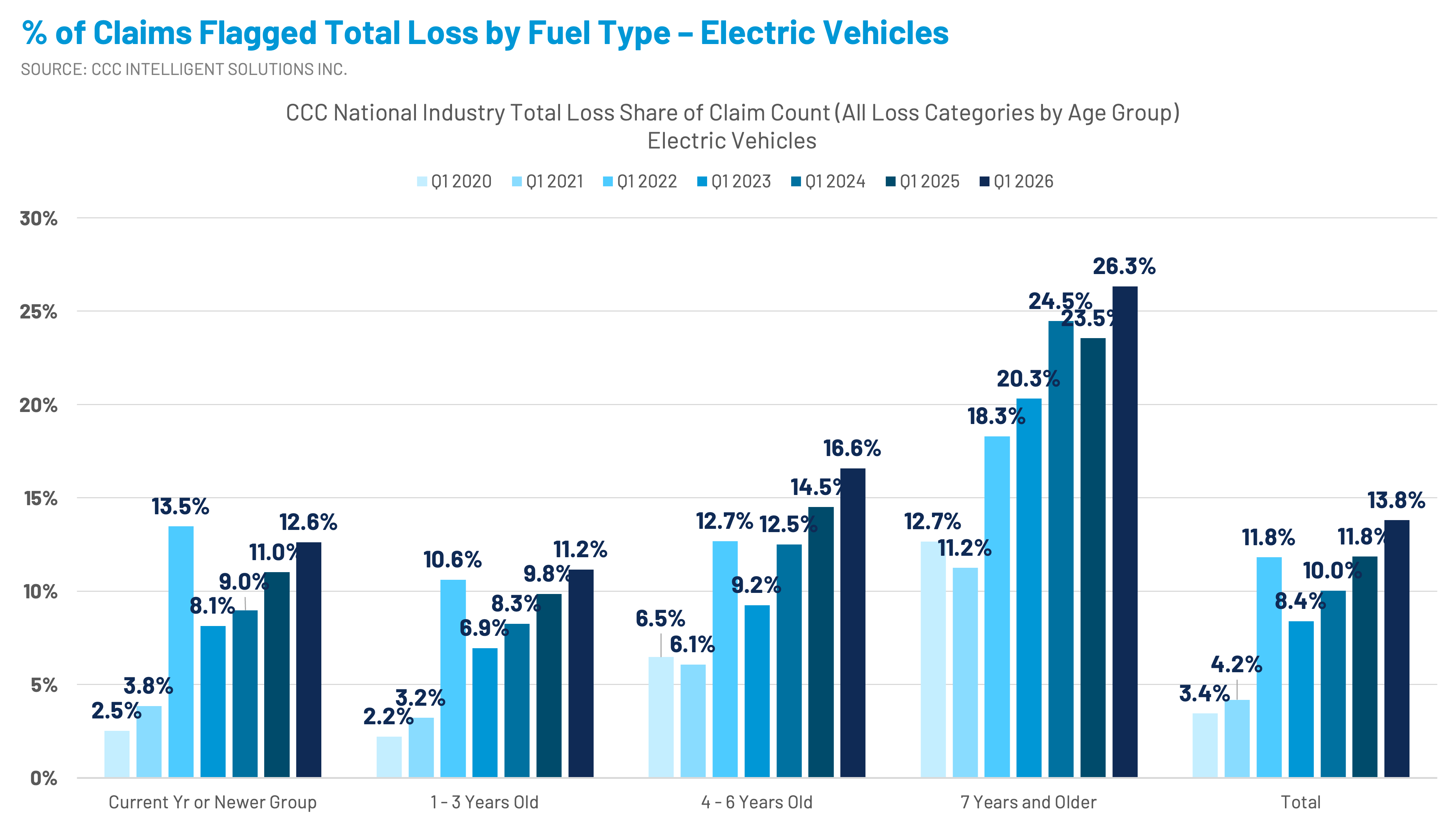
EV total-loss frequency is rising. In 2025, CCC reported that 12.7% of EV claims were flagged as total losses, up nearly two percentage points from 2024. At the same time, EVs were still below the broader industry total-loss rate of 23.1%, below combustion engine vehicles at 24.1%, and below hybrids at 15.1%.
CCC's Figure 5 shows the same pressure visually, with EV total-loss claim share moving higher across several vehicle-age groups and the EV total-loss total reaching 13.8% in Q1 2026.
So the story is not that EVs are already total losses more often than every other vehicle type. The better takeaway is more practical: EV total-loss economics are becoming more important, and the inputs behind those decisions are still uneven.
That matters for insurers, repairers, auto dismantlers, salvage auctions, vehicle-data platforms, and anyone trying to understand whether a damaged EV should be repaired, resold, dismantled, or routed into another recovery path.
What the CCC data is really showing
EVs remain a small share of the overall vehicle fleet, but their share of newer-vehicle claims is becoming more meaningful. CCC reported that EVs were 3.7% of the overall claims mix, while hybrids were 8.5% and combustion vehicles were 87.8%. Among vehicles three years old or newer, EVs represented 9.7% of the claims mix and hybrids represented 18.5%.
That newer-vehicle concentration is important. EV claims are not spread across the age profile in the same way as combustion vehicles. CCC noted that in both 2024 and 2025, vehicles aged one to three years represented more than half of potential EV total-loss valuations. In the broader market, total-loss valuations are much more heavily weighted toward vehicles seven years or older.
The value side is moving too. CCC reported that average adjusted vehicle values for EVs have declined by 46% since October 2022, compared with a 17% decline across the broader industry. That is one of the reasons total-loss pressure matters even when the vehicle is relatively new.
Repair costs are also more nuanced than the old headline. For vehicles three years old or newer, CCC reported that the average total cost of repair gap between EVs and hybrids narrowed from $1,809 in 2020 to $445 in 2025. EVs still require more labor on average, but the labor-hour gap has narrowed materially. CCC also noted that improved parts availability has helped moderate EV repair cost growth.
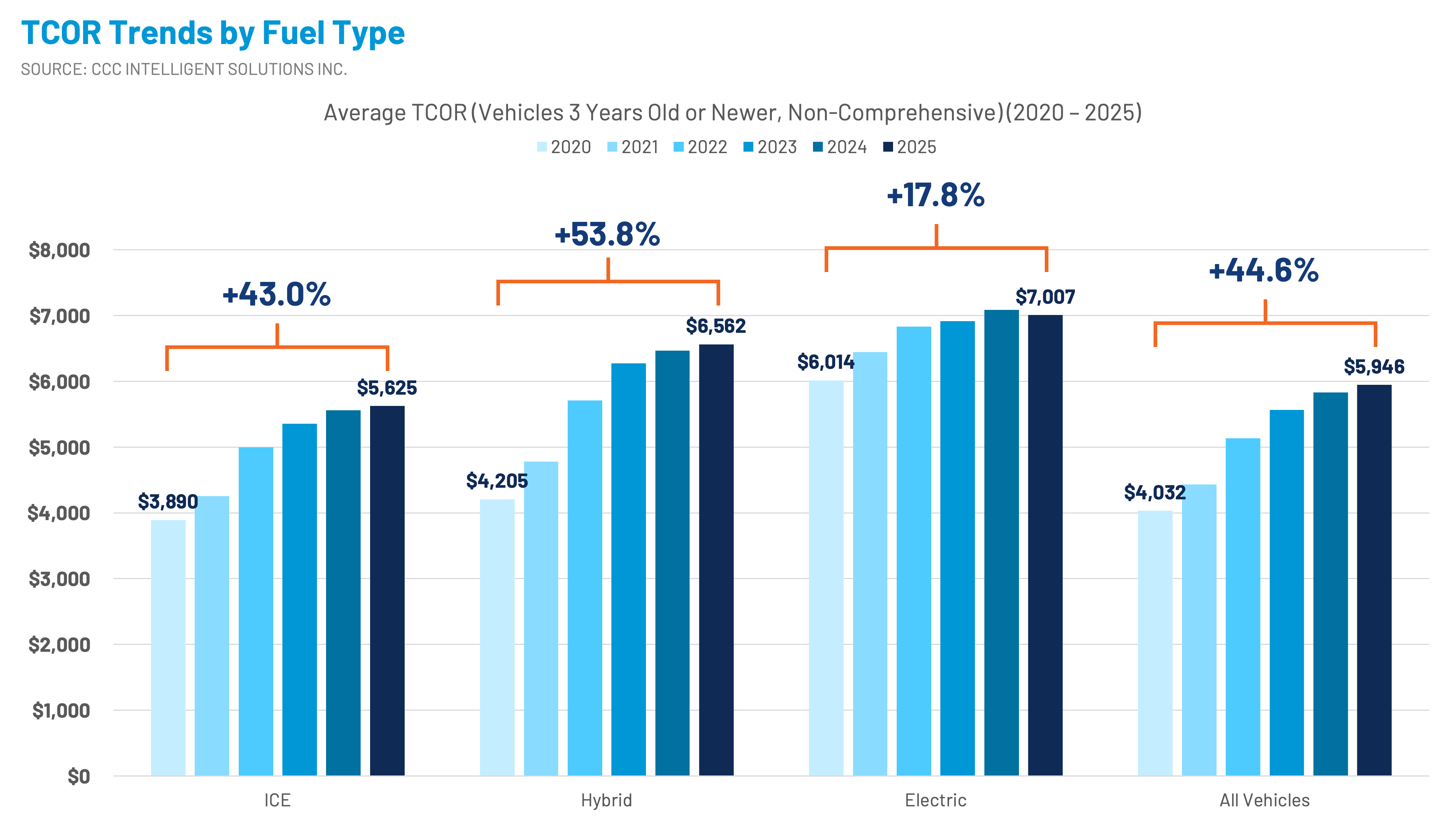
That is the part worth paying attention to.
If parts availability can help moderate repair cost growth, then parts visibility can influence whether a repair path looks viable before a vehicle is written off.
A total-loss decision is not just a damage decision
A total-loss decision is usually treated as a claims outcome, but it is also an information problem.
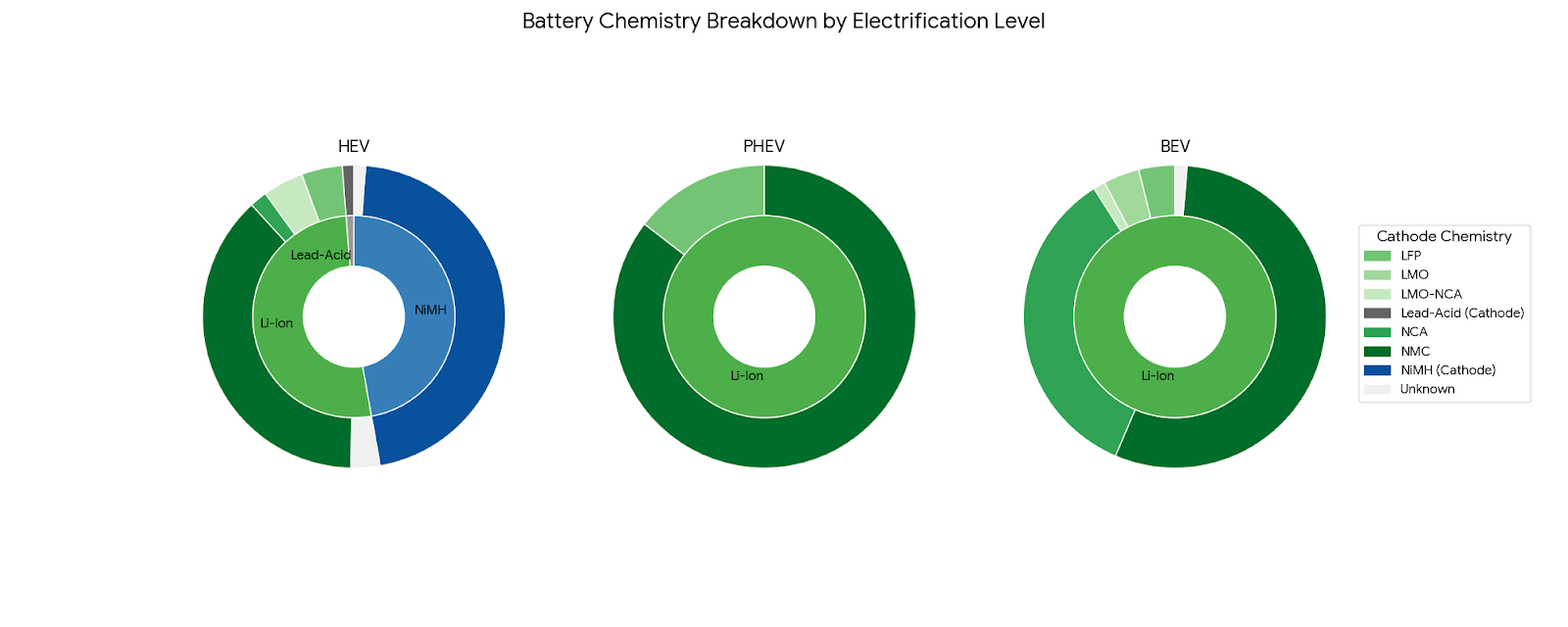
The decision depends on vehicle value, estimated repair cost, expected supplements, salvage value, labor availability, parts availability, cycle time, and confidence in the estimate. When the vehicle is an EV or hybrid, the repair review can also depend on battery identity, high-voltage component fitment, pack condition, diagnostic context, and whether a usable replacement component exists.
If the only visible repair path depends on a new OEM component, a long lead time, uncertain compatibility, or a battery record that is not well understood, the vehicle can start to look uneconomical quickly.
The opposite can also be true. If a repairer, insurer, dismantler, or marketplace can see a functioning low-mileage used component with credible fitment context, the repair economics may change.
That does not mean every vehicle should be repaired. Some vehicles should be total losses. Some batteries should not be reused. Some components need inspection, testing, certification, or a different recovery path.
But the decision should be made with the best available evidence, not because the replacement-parts market is hard to see.
Used parts matter more as EVs enter the claims mix
The EV fleet is still young, but that will not stay static. Leasing concentration, off-lease supply, used EV depreciation, and a growing population of newer electrified vehicles in claims will keep putting more EVs into repair, valuation, auction, and dismantling workflows.
That creates a practical parts question:
- What battery or high-voltage component is actually in the vehicle?
- What other vehicles or model years share the same pack or related part?
- What visual evidence helps confirm fitment?
- Is there observed market evidence for that battery or component?
- Is a used replacement realistic, or is the component better routed for resale, remanufacturing, recycling, or review?
Those questions are difficult when the data is scattered across VIN records, OEM material, yard inventory, auction listings, teardown notes, labels, photos, and tribal knowledge.
They are also exactly the kind of questions that can change the repair-versus-total-loss conversation.
If a low-mileage used part is available but not visible to the estimating, claims, or sourcing workflow, it might as well not exist. The vehicle gets evaluated against a narrower repair path than the market can actually support.
Where ARC fits
ARC is built around this information gap.
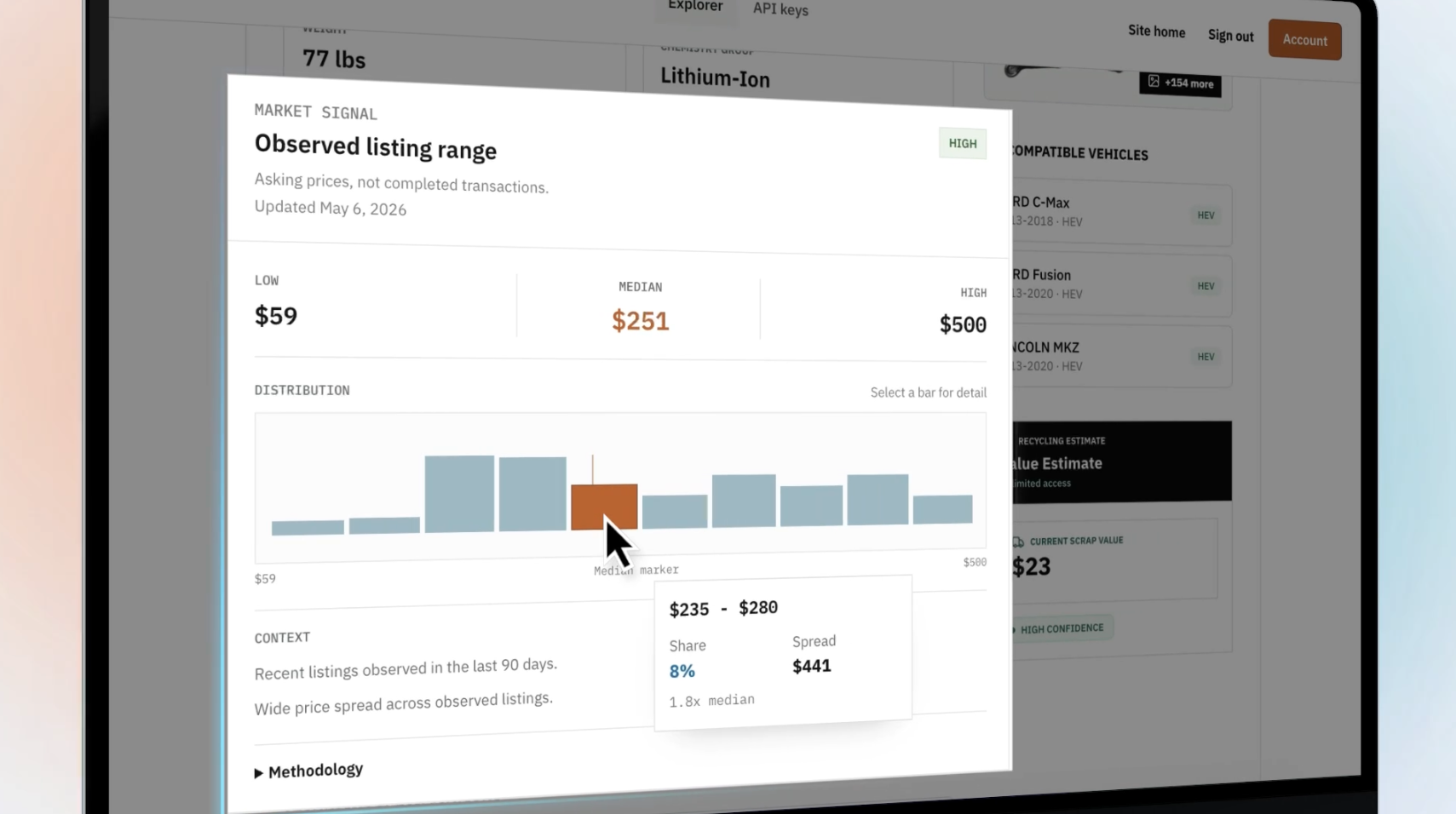
Explorer gives teams a way to review battery intelligence from the vehicle record forward. That can include vehicle-to-battery-to-cell relationships, battery identity, technical specifications, visual references, image galleries, and Market Signal where supported records have observed external listing evidence.
For this total-loss problem, the value is not a magic number. It is not a repair guarantee. It is not a substitute for inspection, safety review, insurer judgment, or commercial decision-making.
The value is giving operators another evidence layer before value is destroyed.
For an auto dismantler, that may mean identifying which battery or component is worth preserving, photographing, listing, or validating.
For a salvage auction or vehicle-data platform, it may mean enriching a vehicle record with battery context that the buyer, appraiser, or downstream operator can actually use.
For an insurer or repair ecosystem partner, it may mean seeing more of the replacement-parts market before assuming the repair path is limited to the most expensive or least available option.
For a core aggregator or EV remarketing team, it may mean understanding whether the battery has a higher-value reuse, resale, or recovery path before the asset is reduced to a generic salvage decision.
The practical goal: fewer avoidable total losses
The right target is not "repair every EV."
The target is fewer avoidable total losses.
When functioning, low-mileage used parts are visible and supported by better fitment context, more vehicles get a fair repair review. When replacement battery data is connected to VINs, listings, yard inventory, and claim workflows, the decision becomes more specific. When operators can compare technical context with observed listing evidence, they can separate a real repair opportunity from wishful thinking.
That is where the industry needs to go.
The growing EV claims mix will not be solved by one database, one estimate, or one salvage value. It will be solved by better evidence moving through the workflow earlier: vehicle identity, battery identity, component fitment, condition evidence, listing-market context, and a clear view of the available replacement-parts market.
If those inputs improve, total-loss decisions can become less blunt.
And more vehicles that deserve to stay repairable will have a better chance of doing so.
Open Explorer
ARC's Explorer is built for teams that need better battery and replacement-value context inside real vehicle workflows. Use Explorer to review supported battery records, technical context, visual references, and Market Signal where available.
Open ExplorerSource Notes
- CCC Intelligent Solutions, Kyle Krumlauf: From Surge to Stall: What's Really Driving the EV Market Reset
- CCC Intelligent Solutions: Crash Course 2026: Complexity Compounds