Hybrid battery core value: How buyers price usable parts
Why demand, usable yield, and the buyer's rebuild process matter more than the word core.

Hybrid battery core value depends on what a buyer can build from the battery and who will buy that finished pack. A core is an input to a remanufacturing process. Its price reflects demand for the finished part, the usable parts inside the core, and the cost to turn those parts into a product.
When I assess a core, I want to know what the rebuilder needs and how much of this pack will meet that need. That question explains why two packs with the same name can earn very different offers.
What buyers mean by a battery core
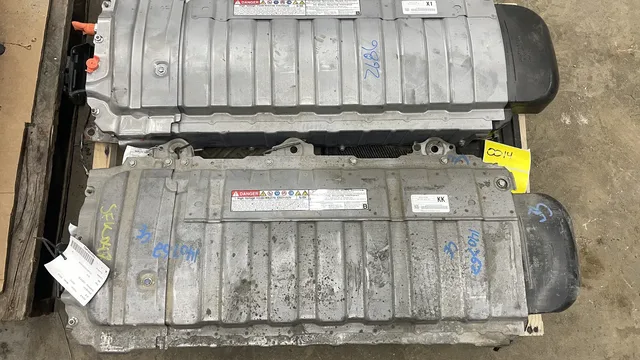
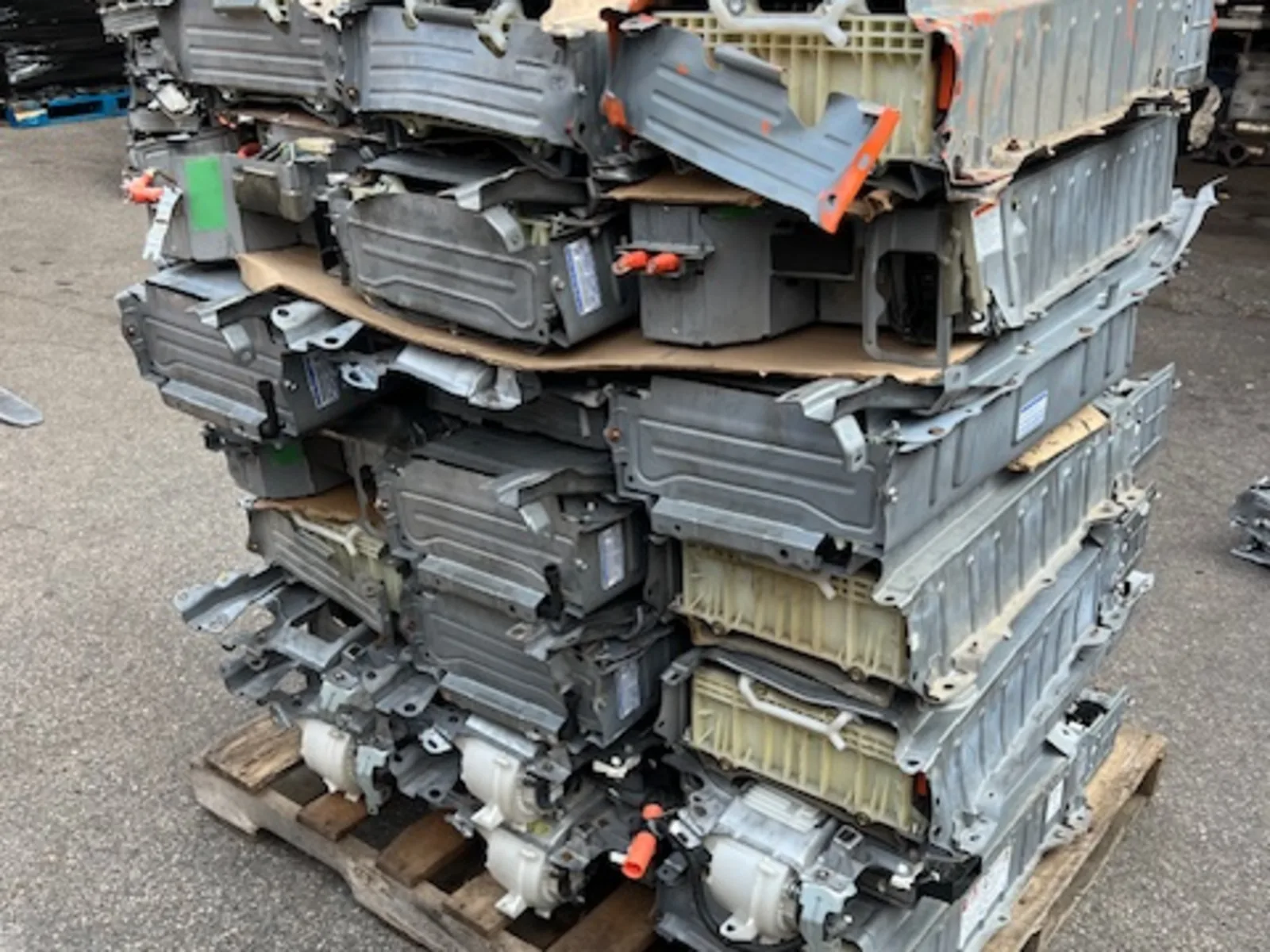
In conversations with salvage yards, rebuilders, and recyclers, I hear the word core used in several ways. One seller means a failed battery. Another means a pack they cannot sell through their used-parts channel. A third means a complete donor pack that a rebuilder wants in volume.
Those are different offers. Before discussing price, agree on what the buyer will do with the battery.
| Term | What is changing hands | What drives the value |
|---|---|---|
| Used replacement | A pack sold to keep a compatible vehicle on the road | Fitment, tested condition, demand, and sale terms |
| Remanufacturing core | A pack used to supply a rebuilding process | Usable parts, demand for the output, and the cost of the work |
| Returned core | The old unit sent back after a replacement sale | The seller's return and acceptance terms |
| Supplemental core | An extra unit sourced outside that return stream | The buyer's shortage of suitable inputs |
| Recycling feedstock | A battery sent for material recovery | Recoverable materials, process costs, freight, and buyer terms |
A yard may call a pack a core because it cannot sell it at retail. That does not establish whether the best next buyer is a rebuilder or a recycler. Sometimes the yard lacks a buyer for the parts that still have use.
A core charge brings the old part back
Take a simple, hypothetical alternator sale. The replacement costs $150, with a $100 core charge. The customer pays $250 up front and gets the $100 back after an eligible old unit is returned. These are example amounts, not current prices.
The charge gives the customer a reason to return the failed part. It also helps supply the rebuilder. But not every returned part can pass the rebuild process, and the charge does not tell a yard what an unrelated loose core is worth.
Acceptance terms matter. For example, Dorman's published hybrid battery core policy requires a complete core of the same part type and application as the replacement. Use the terms for the actual transaction.
Core yield explains why rebuilders buy extra stock
Yield means the share of inputs that pass the buyer's process. The rest may supply other parts, go to recycling, or carry a disposal cost.
First, think about whole units. Assume each finished sale brings back one core, all returns arrive, and purchased cores pass at the same rate as returned cores. These examples describe a steady flow of work, not a guaranteed result from a small batch.
At 80% yield, five incoming cores produce four finished units. Four sales bring back four cores, so the rebuilder must buy one extra core. That is one supplemental core per four finished units, or 0.25 per unit.
At 25% yield, four incoming cores produce one finished unit. That sale brings back one core, so the rebuilder must buy three more. That is three supplemental cores per finished unit.
The calculation is:
Total cores per finished unit = 1 ÷ yield
Supplemental cores per finished unit = (1 ÷ yield) − 1
These are planning examples, not measured industry yields. If some customers never return their cores, the buyer needs more outside supply. If purchased cores are better than returns, it may need fewer than this same-yield model suggests.
Prius core value: Calculate the cost per usable module
For a battery rebuilt from donor modules, the useful unit can be the module itself. Toyota documents 28 NiMH modules in the 2010 third-generation Prius battery. Each module contains multiple cells; a module is not one cell.
In the rebuild workflows I am describing, modules from several donor packs can go into one finished pack. The rebuilder tests them and groups suitable modules with similar health and capacity. Greentec Auto's Gen 3 Prius product description is one public example of capacity matching and balancing in this process.
Now assume a buyer pays $200 per donor pack and expects 25% of its modules to pass. These are illustrative inputs, not a Prius price quote or a claim about typical yield.
| Calculation | Result |
|---|---|
| Modules per donor pack | 28 |
| Expected usable modules: 28 × 25% | 7 |
| Core purchase cost per usable module: $200 ÷ 7 | About $28.57 |
| Donor packs needed for 28 usable modules: 28 ÷ 7 | 4 |
| Total core purchases: 4 × $200 | $800 |
The buyer spends $800 on core inputs to obtain enough passing modules for one pack in this model. Use the unrounded cost in the calculation: ($200 ÷ 7) × 28 = $800.
That is only the core purchase cost. Labor, test equipment, machine time, replacement parts, freight, overhead, and warranty costs still have to fit into the margin. The model also excludes any credit or cost for the rejected material and leftover hardware.
Passing modules must also form a suitable matched set. Four packs may yield 28 passing modules in total without yielding one set that meets the buyer's build standard. Real stock needs can therefore be higher.
This is why the price per core can mislead. A cheaper pack with poor yield may cost more per usable module. A buyer with strong demand may pay more for a better source of cores and still reduce its input cost.
The price is per pack. The cost is per usable module.
An illustrative $200 donor pack contains 28 modules. Change the expected pass rate to see the input cost.
Highlighted share: 7 of 28 modules expected to pass per donor.
Core inputs for 28 passing modules
$800.00
- Expected donor packs
- 4
- Cost per usable module
- $28.57
$200 ÷ 7 usable modules × 28
Planning averages, not guaranteed batch results or current prices. Passing modules still need to form a suitable matched set. Core inputs exclude labor, testing, freight, other parts, overhead, warranty, and residual material value.
Was the battery still working when it was removed?
A pack removed from a running vehicle tells a different story from one removed because the battery failed. I ask about that history before I assign a yield assumption.
A vehicle may reach a salvage yard because of age, crash damage, or some other failed part. Its battery may have worked until the vehicle came off the road. People often call these batteries pull-offs.
With sound test evidence, a pull-off can be a strong source of usable parts. It may also be worth selling as a complete used replacement. Recent use is helpful evidence, but it does not prove remaining life or rule out crash, water, or storage damage.
A returned failed battery starts with a known problem. It may have weak modules, a failed sensor, damaged wiring, or another fault. It can still be useful to a buyer with the right process. The question is which parts will pass and what it costs to find them.
I generally expect a documented working pull-off to yield more than an unknown failed return. I would not assign either one a guaranteed pass rate without tests.
Keep the complete pack together
The buyer may want something other than the old modules. A business fitting new cells may care most about the case, wiring, electronics, and other hardware it will reuse.
Keep covers, service disconnects, harnesses, and other supplied parts with the pack. Record anything missing or damaged. Do not strip parts just because one buyer did not want them last time.
Missing items can reduce the first quote or the final payment after receipt. Ask for the buyer's list of required parts and deductions before shipping.
Choose the route that preserves the most value
My starting order is used automotive replacement, automotive core, second-life energy storage, then material recycling. It is an order for checking opportunities, not a promise that each route always pays more than the next.
- Used automotive replacement. A sound, tested pack may serve a vehicle that needs that exact part. The buyer pays for a working battery with a supported fit.
- Automotive core. The pack supplies a rebuild for a vehicle application. Some of its parts retain their original purpose.
- Second-life energy storage. A suitable battery may serve a new application, often with new controls, packaging, and system work.
- Material recycling. The buyer recovers materials rather than preserving the pack as a vehicle part.
I check automotive uses first because changing the battery's job adds work. the national lab's second-use cost model treats repurposing as its own economic decision. Testing and conversion costs need room in that buyer's offer.
Demand can change the order. A pack with no viable automotive buyer may have a better second-life outlet. A damaged pack may have no reuse route at all. Compare accepted net offers after costs, not just the largest headline price.
How battery chemistry affects repair and recycling costs
For a core buyer, chemistry is not a stand-alone metal price formula. Demand and usable yield lead the core decision. Chemistry still affects the type of rebuild, transport requirements, and the outcome if the core fails testing.
If a battery cannot be rebuilt, the buyer may have to pay to send it for recycling. That risk can lower what the buyer will pay for the core. This does not mean every LMO battery has negative value. The net result depends on the pack, the recycler's terms, and the cost to move it. ARC's cathode chemistry guide covers those distinctions.
In lithium-ion packs I see in the field, some repair opportunities involve a specific fault, such as a sensor, contactor, or corrosion issue. That is a different job from sorting aged NiMH modules into matched sets. A known repair can improve a buyer's expected yield, but lithium-ion chemistry alone does not establish it.
For the material route, use the separate scrap-value workflow. Recycling is also broader than grinding: the EPA describes several recovery processes, including direct recycling that preserves cathode structure.
Use Explorer to agree on the pack and its donor parts
A seller says, "I have a Lexus CT battery." A buyer asks for "Prius Gen 3 cores." Without a shared reference, they may miss a useful match.
ARC's Toyota Prius Gen 3 record connects that pack family to Prius, Lexus CT, and Prius V applications. Explorer gives both parties a common record to discuss alongside the seller's photos.
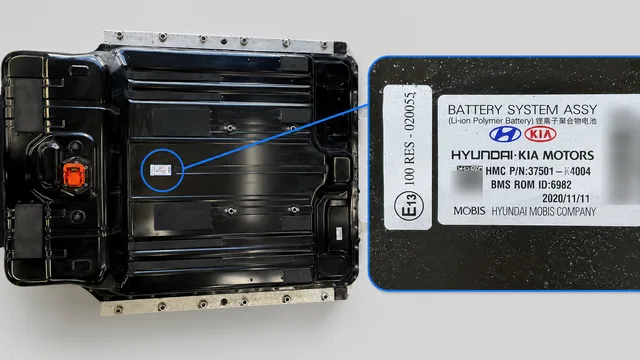
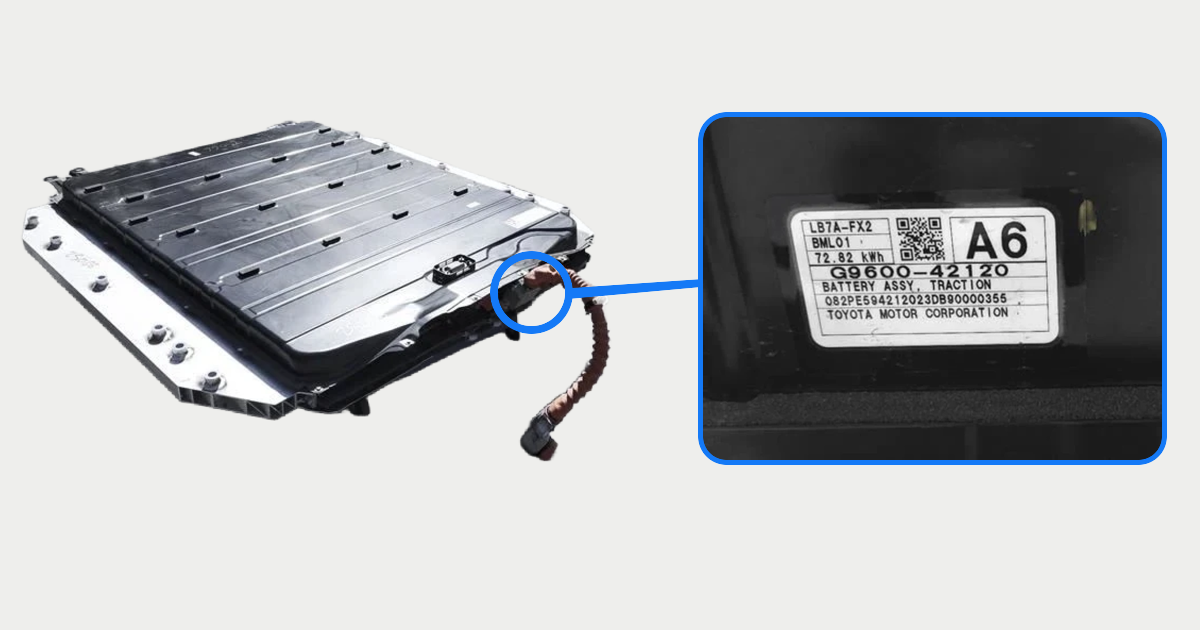
Compare the label, case shape, connectors, and other visible features. Connector color can help narrow a match, but it is not enough by itself. Use the battery identification guide and part-number guide when the evidence needs another check.
The relationship below the pack is useful too. A buyer seeking a specific module family can review the packs ARC links to it. That broadens the donor search beyond one vehicle name.
See the module behind the Prius example
Start with the pack. Follow its module record to research other donor packs.


Prepare a core quote that holds up at receipt
The first sale between two parties needs enough detail to establish shared expectations. Repeat buyers may need fewer explanations once trust grows. Keep the identity, condition, and commercial terms in the record either way.
- Agree on the intended use. Is the buyer seeking a complete used pack, donor modules, or an enclosure for new cells?
- Share the pack identity. Include the Explorer record, label, part number, and clear photos. Add donor VIN and vehicle details when available.
- State why it was removed. Separate tested facts from seller history. Disclose known faults, repairs, damage, and missing parts.
- Confirm the quote basis. Ask whether the offer is per complete pack, accepted core, or usable component. Agree on any tests and deductions.
- Get the freight terms. Confirm packaging, pickup, carrier acceptance, extra charges, and who pays them.
- Agree on settlement. Set the inspection window, rejection process, payment timing, and treatment of material that fails.
For a mixed load, tell the carrier which pallets contain NiMH batteries and which contain lithium-ion batteries. Confirm each pallet's hazard status and ask whether grouping the lithium-ion batteries on fewer pallets would reduce the freight charge. Agree on the packing plan and any hazardous-material fees before shipping.
Use PHMSA's lithium battery shipping guidance to check the applicable requirements with a qualified shipper. Packaging, battery condition, and transport mode matter. Damaged batteries may require separate treatment; do not combine them merely to save freight.
Frequently asked questions
What is hybrid battery core value?
It is what a buyer will pay for a battery as an input to rebuilding. Demand for the finished product, usable yield, process costs, and the buyer's terms shape the offer.
Is a core charge the same as core value?
No. A core charge is part of an exchange sale and encourages an eligible return. A quote for a loose core is a separate offer from a buyer.
How many extra cores does an 80% yield require?
In the whole-unit example above, one extra core per four finished units. That assumes one returned core per sale and the same pass rate for returns and extra purchases.
Does a failed battery still have core value?
It can. A buyer may want passing modules, repairable hardware, or a complete case for new cells. Ask what the buyer needs before stripping or routing the pack.
Does a shared module mean the complete packs interchange?
No. Shared donor parts and complete replacement fitment are different claims. Confirm the specific assembly and application before selling a pack as a drop-in replacement.
Can Explorer tell me the final core price?
Explorer helps establish which pack and donor family you have. The buyer still sets its offer using the actual condition, expected yield, demand, and terms. A record or photo cannot measure the health of the pack on your pallet.
Start with the battery identity. Open Explorer and share the matched record with your buyer. For repeat intake, the Explorer-by-VIN API brings vehicle and battery data into your own workflow. For help defining that workflow, talk with ARC.